Politics
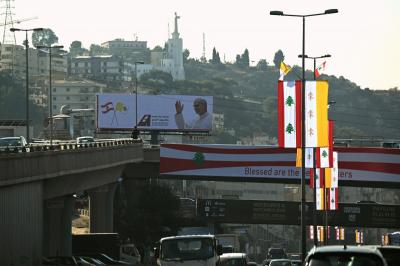

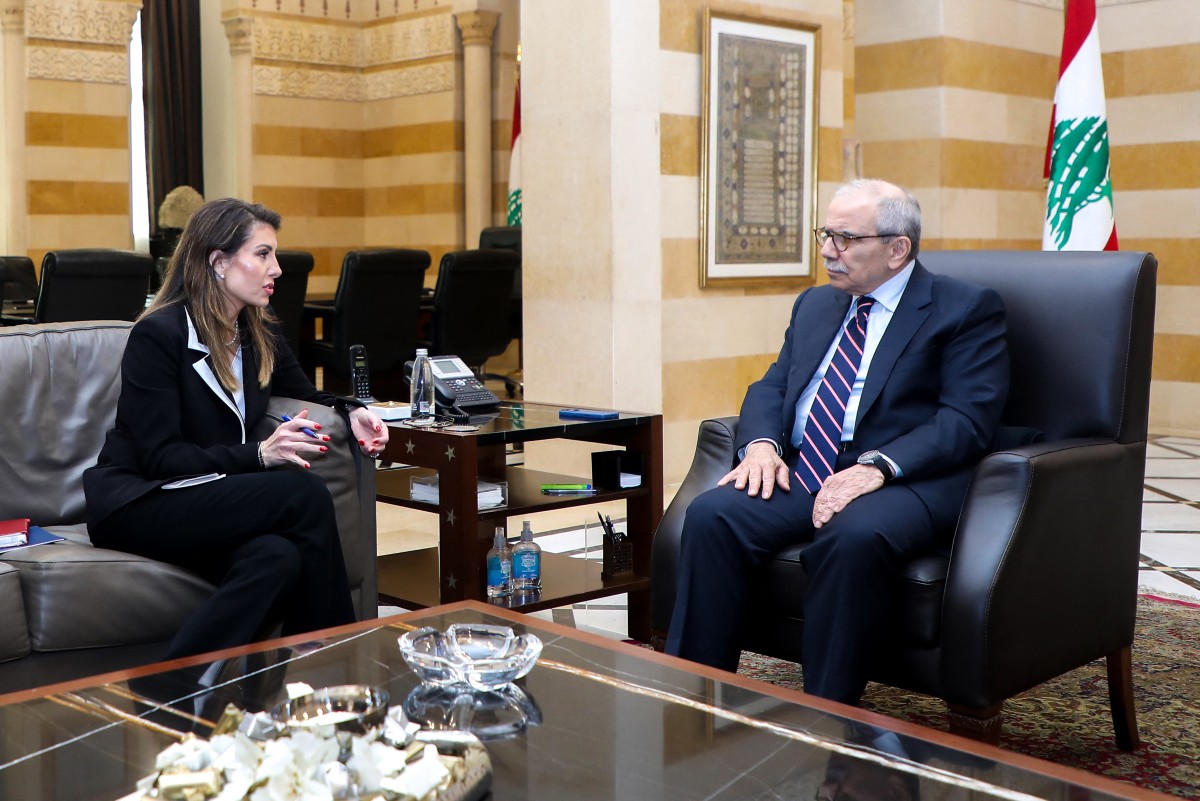




Beirut has been witnessing a flurry of diplomatic activity in recent days. Have the major capitals suddenly remembered that Lebanon occupies a place on the Middle East map that cannot be ignored? From Cairo to Washington, passing through Tel Aviv, messages and interests now intersect at one table, whether in Baabda Palace, Ain el-Tineh, or the Grand Serail, where U.S. envoy Morgan Ortagus has been shuttling between Lebanon’s three presidents, carrying what looks like a “reboot” of the Lebanese file after months of paralysis and tension along the southern border.
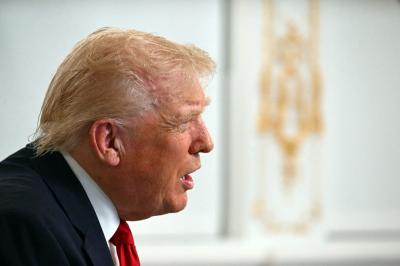
Yet this diplomatic activity led by Washington through Ortagus, initially paving the way for the upcoming visit of U.S. Middle East envoy Tom Barrack before its later cancellation, cannot be separated from the cautiously evolving regional climate, nor from President Donald Trump’s desire to keep Lebanon’s borders under the formula of “calm in exchange for state authority.”
The canceled visit by Barrack did not appear to be a mere routine stop, but rather a political mission led by an American “password” whose meaning is clear to all: “It is time for Lebanon to speak its final word, to define its destiny as a sovereign state on its own land, not as an open front on behalf of others.”
The Groundwork Laid by Morgan Ortagus
Ortagus’s visit to Beirut followed an intensive field tour in Israel, bringing with her a dual set of messages: reassurance on one hand, and warnings on the other.
In her meetings with Lebanon’s three presidents, she emphasized the need to reactivate the mechanism of the ceasefire monitoring committee, designed to serve as a liaison between the Lebanese and Israeli armies under UN auspices.
But Ortagus went further, proposing two—and only two—options: either direct negotiations with Israel to cement the lines of calm, or indirect talks through expanding the “mechanism” to include civilians alongside the military.
In both cases, the message is clear: Lebanon must move from the position of “resistance” to that of “statehood”—from the ambiguity of armed power to the clarity of legitimate authority.
Ortagus did not hide Washington’s displeasure with reports of weapons being smuggled from Syria to Lebanon, merely noting that the U.S. administration “has not yet confirmed these accounts” but is treating the possibility with utmost seriousness.
In the logic of U.S. diplomacy, that amounts to a “pre-notification” of any future confrontation.
Tom Barrack: The Same Message
Tom Barrack, who canceled his Beirut visit, is no stranger to the Lebanese file.
He previously handled the same mission before it was passed to former envoy Barbara Leaf, only to return now as “Special Envoy for Middle Eastern Affairs.”
According to U.S. diplomatic sources, the password Barrack was to bring to Beirut revolved around three main points:
First, consolidating the ceasefire in the South under Resolution 1701, with a gradual Israeli withdrawal from disputed points.
Second, ensuring that all arms remain in the hands of the Lebanese state and preparing the army to assume full responsibility south of the Litani River, backed by international support contingent on economic and security reforms.
Third, opening the door to an international economic support conference for Lebanon—provided the government demonstrates “seriousness in addressing the weapons issue.”
In other words, Barrack wanted to tell Lebanese officials that time has run out and that Washington—and behind it Tel Aviv—no longer accepts a policy of procrastination that excuses state weakness under the pretexts of “security fragility” or “army unpreparedness.”
"Hezbollah" Between Defiance and Denial
In response, "Hezbollah"’s Secretary-General Sheikh Naim Qassem issued a defiant and provocative statement, declaring that his followers “will fight even if armed only with sticks, until the last man and woman.”
As if the Lebanese are expected to applaud a suicidal rhetoric and believe that “defending sovereignty” must pass through the destruction of what remains of state institutions.
This discourse fundamentally contradicts the American message, seeking instead to entrench the logic of a “parallel state” against the “legitimate state.”
What is new this time is that the regional environment no longer tolerates such duality.
Cairo has re-entered the Lebanese scene through a visit by intelligence chief Hassan Rashad, while the Arab League dispatched its Secretary-General Ahmed Aboul Gheit to Beirut to reaffirm support for “national legitimacy.”
Meanwhile, Israel and its allies are closely—and anxiously—watching what they call the “critical moment” in the South.
Between the Stick and the Carrot
The Trump administration’s current approach relies on a mix of pressure and incentives: the “stick” consists of near-daily Israeli airstrikes and explicit warnings that Washington “will not intervene” if "Hezbollah" ignites a full-scale front.
The “carrot,” meanwhile, is the promise of an international conference to support the army and reconstruction—on the condition that the official Lebanese state proves capable of controlling its weapons and unifying its security decision.
In that sense, Barrack’s canceled visit was never meant to be a mere diplomatic show, but rather a veiled ultimatum: Washington is ready to support Lebanon—but not a Lebanon divided between "Hezbollah" and “the State.”
Is It Time for Lebanon’s Final Word?
This is where the anticipated U.S. visit draws its deeper meaning.
Lebanon now stands at the edge of a new phase that allows no ambiguity.
Betting on “time” is no longer an option, and relying on “temporary settlements” can no longer rescue what remains of national sovereignty.
The question many are asking today is this: does official Lebanon have the courage to speak its word and define its destiny as a full-fledged state, not a submissive front?
Or will the game of balancing acts continue until the very end—when future wars once again write the nation’s fate on behalf of all Lebanese?
Beyond the Visits
Between Ortagus and Barrack, between Cairo and Washington, between the militia and the state, Lebanon once again stands before a harsh historic test: either to reinvent itself as a state worthy of survival, or to keep sliding into the mold of failed states whose destiny is dictated by the gun.
Especially since the “password” Barrack carried was no secret at all, but an explicit reminder of what the Lebanese have long known: there can be no state without sovereignty, and no sovereignty with weapons outside its authority.
Please post your comments on:
comment@alsafanews.com