Politics




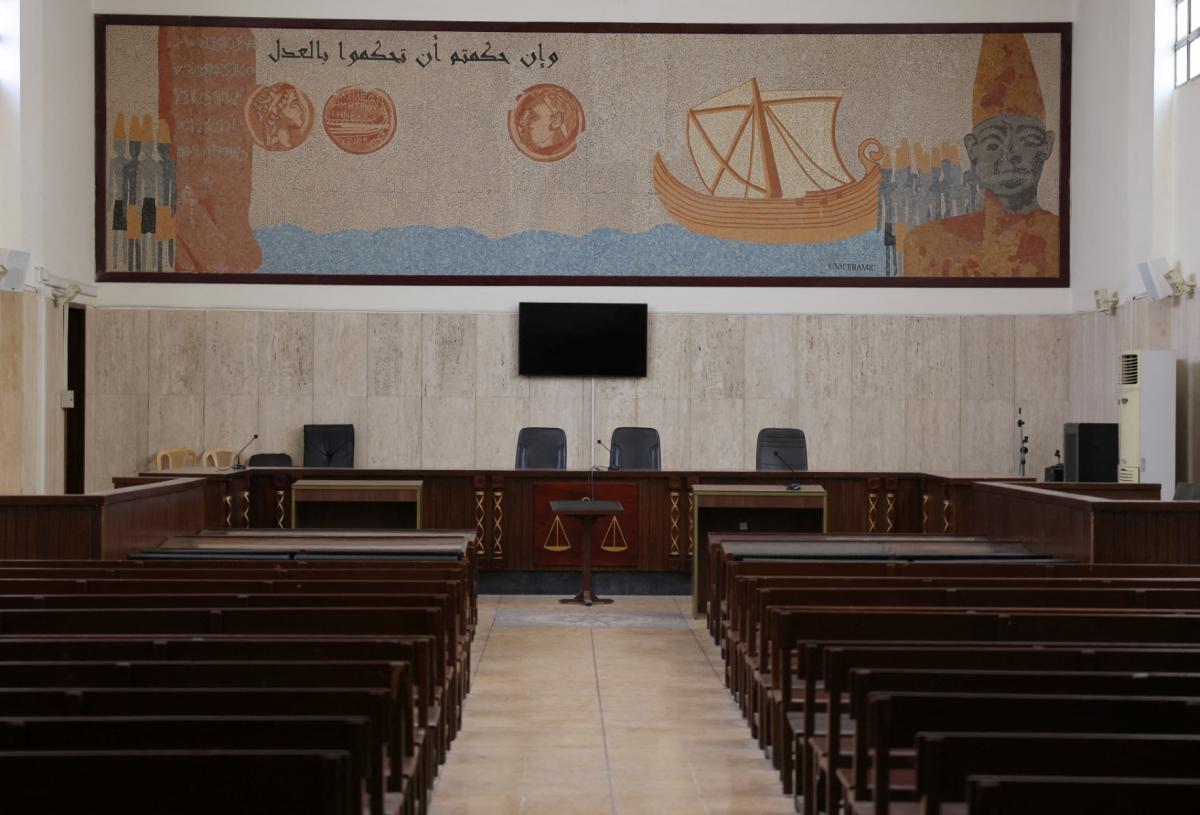




In the second and third centuries AD, Beirut—then known as Berytus—rose to cultural prominence under Roman rule, transforming into a major center for legal studies in the empire after the establishment of the Beirut School of Law in the early third century. The school reached its peak in the fifth century, when its teaching language shifted from Latin to Greek, requiring students to master both to grasp the foundations of legal principles. Beirut was the only city, alongside Rome and Constantinople, authorized by the emperor to officially teach Roman law.
The imperial privilege granted to the Beirut School of Law reflected its elevated status as a pioneering legal hub in the Roman Empire, especially after it was entrusted with preserving constitutions and given formal approval for legal education. These factors—together with Beirut’s geographic location and its cultural and philosophical heritage—cemented its place as a global center of learning. Law students from across the empire flocked to its professors to delve into Roman jurisprudence. Generations of jurists emerged, leaving an indelible mark on the codification of law, particularly in the Corpus Juris Civilis commissioned by Justinian in the sixth century AD—one of the greatest achievements of Roman legal civilization. That body of work later became the foundation of European civil law and, in turn, a cornerstone of modern Western civilization.
The French legal historian Pierre Collinet gained renown for his pioneering research on the Beirut Law School, most notably his reference work Histoire de l’École de Droit de Beyrouth, considered one of the most important sources for understanding the origins and development of the institution. Collinet relied on historical texts, inscriptions, and legal sources to reconstruct the intellectual and organizational framework of the school, highlighting Berytus’s central role as a hub for legal education in the Eastern Roman Empire.
In the same vein, Linda Jones, in her book Roman Berytus, notes that Beirut was recognized as a distinguished center for legal studies and training in Latin language and literature. Its reputation began under the patronage of the Severan dynasty and endured through successive emperors and political shifts, earning the city the title polis romaikotera—“the most Roman city” among the Greek-speaking cities of the East.
Gregory of Nazianzus described it as “the beautiful city of Phoenicia, seat of Roman laws,” a description echoed by Zacharias of Mytilene, who affirmed its title “Mother of Laws”—later rendered in the Digest as legum Nutrix, or “mother of laws.” The philosopher Libanius employed more philosophical terms, calling it Pankale (“goodness, nobility, and beauty”), Kalliste Polis (“the most beautiful city”), and Nomon Metera (“mother of laws”).
This evolution of titles—from “the beautiful city” to “nurse of laws”—clearly reflects Beirut’s stature. The recurring epithets express an exceptional appreciation of its role, so much so that the title “Mother of Laws” became a precise description of a historical reality, not merely a poetic metaphor or a nostalgic flourish. It was rooted in the city’s tangible contribution to the production and codification of legal thought and the consolidation of concepts of justice and rights within a global legal system. Notably, no other city in history has ever been given such a designation.
The Beirut Law School vanished in 551 AD after an earthquake destroyed the city, erasing its physical remains and leaving only speculation about its exact location. Yet its intellectual legacy endured in legal texts, and names such as Ulpian and Papinian—jurists who lectured in Beirut and shaped Roman legal thought itself—remained prominent. In that era, law was a common language among cities, and Beirut crafted a unique model under foreign rule, exporting laws just as its Phoenician ancestors had once exported letters and sciences. Beirut was the city that both taught and legislated.
But where is the “Mother of Laws” today? Beirut has become a city of rhetoric and noise, where political language is deliberately elastic, designed to mislead, far removed from precision in legislative drafting—as if the earthquake had struck minds rather than stones, and law had turned into a mere tool in the hands of politicians. The Beirut that once taught the world—can it even govern itself in a state of institutions free from sectarian warlords? And if self-governance has become nearly impossible, what is more dangerous: surrendering to ignorance and a culture of death, or rising under the authority of a strong state to focus on our daily lives and intellectual revival?
Can a city with such a legacy still bear it when we are still debating judicial independence and the autonomy of judges? Is it enough to repeat the slogans of the past and celebrate them while failing to build a civil state that respects the law, undermined by reckless politics, foreign ambitions, and internal contradictions that demolish what our ancestors built and distort this proud title?
This legacy, though marginalized in modern times, remains present in memory. The slogan survives to this day, echoed in speeches, conferences, and cultural and artistic works. It remains a starting point for rethinking Beirut’s contemporary role as a potential incubator for a new legal and civic renaissance. Once, Beirut exported laws; today, it drowns in collapse.
The “Mother of Laws” does not deserve this state of ruins.
Lamis Choukair - Lebanese writer and producer
Please post your comments on:
comment@alsafanews.com